5 successful recycling projects

Plastic recycling is an essential practice to combat environmental pollution and promote sustainability.

As the production of plastics increases and its negative impact on the environment intensifies, recycling is presented as an effective and necessary solution.

In today’s blog we remember the benefits of plastic recycling and discover 5 projects that demonstrate its positive impact.

Benefits of plastic recycling

Reduction of waste in landfills:

Plastic recycling significantly decreases the amount of waste that ends up in landfills and oceans.

This not only preserves landfill space, but also reduces land and marine pollution.

Conservation of natural resources:

By recycling plastic, you reduce the need to produce new plastics from virgin raw materials, such as oil and natural gas.

This helps conserve these non-renewable resources and decreases the environmental impact associated with their extraction and processing.

Energy saving:

Manufacturing recycled products requires less energy than producing new plastics.

For example, recycling PET (polyethylene terephthalate) plastic consumes up to 50% less energy than producing it again.

Reduction of greenhouse gas emissions:

The production and decomposition of plastics emit greenhouse gases.

Recycling plastic helps reduce these emissions, contributing to the fight against climate change.

Promotion of the circular economy:

Plastic recycling encourages a circular economy, where materials are continually reused and recycled.

This not only reduces waste, but also creates new economic and employment opportunities in the recycling industry.

Successful plastic recycling projects

Plastic Bank

Source: https://plasticbank.com/about/

Founded in 2013, Plastic Bank is a social enterprise that seeks to empower poor communities by collecting and recycling ocean plastics.

In exchange for plastic, collectors receive compensation in cash or goods.

This project has recycled millions of kilograms of plastic.

Providing sustainable income to thousands of people in countries like Haiti, the Philippines and Brazil.

The Ocean Cleanup

Source: https://theoceancleanup.com/oceans/

This Dutch organization, founded by Boyan Slat in 2013, is dedicated to developing advanced technologies to remove plastics from the ocean.

Its passive ocean cleaning system uses ocean currents to collect plastic in areas of high concentration.

An example is the Great Pacific Garbage Patch.

So far, they have managed to collect tons of plastic waste, significantly contributing to ocean cleanup.

Ecoalf

Source: https://ecoalf.com/

This Spanish fashion brand transforms plastic waste collected from the seabed into high-quality clothing and accessories.

They collaborate with fishermen around the world to collect plastics from the ocean.

They are then processed and turned into sustainable fabrics.

Ecoalf also raises awareness about the problem of marine plastic pollution.

Precious Plastic

Source: https://www.preciousplastic.com/

Founded by Dave Hakkens, Precious Plastic is a global movement that provides free tools and knowledge so people can recycle plastic in their communities.

They offer plans and tutorials for building low-cost plastic recycling machines.

This allows anyone to set up their own recycling center.

This project has inspired the creation of hundreds of recycling micro-businesses around the world.

TerraCycle

Source: https://www.terracycle.com/es-ES/

Recycling company that specializes in difficult-to-recycle materials, such as plastic packaging and electronic waste.

They offer free recycling programs funded by brands and manufacturers.

Allowing consumers to send their waste to TerraCycle for recycling.

This project has recycled billions of units of waste.

Thus considerably reducing the amount of plastics that end up in landfills and incinerators.

Plastic recycling mitigates the negative environmental impact of plastic.

It also offers significant economic and social benefits.
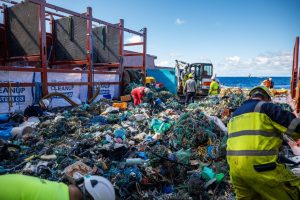
The successful projects mentioned demonstrate the viability and effectiveness of plastic recycling.

And they also inspire others to participate in this crucial global task.

By adopting and supporting plastic recycling practices, we can move towards a more sustainable and cleaner future.

Creative ideas to reuse plastic containers at home

Today we are clear that recycling is an essential part of our commitment to the environment.

But in addition to depositing our waste in the corresponding containers, we can do something else from home.

Reusing plastic packaging at home not only helps reduce our carbon footprint, but also allows us to unleash our creativity.

From simple crafts to more elaborate DIY projects, we have many options to transform plastic containers into useful and decorative objects.

In today’s blog we tell you creative ideas to reuse plastic containers at home.

Crafts to reuse plastic at home

1. Pots for plants

Do you have empty plastic bottles hanging around the house?

Turn them into plant pots.

Simply cut off the top of the bottle, poke holes in the base for drainage, and decorate as desired.

Perfect for growing aromatic herbs, for example.

2. Desk organizers

Transform plastic containers into practical desk organizers.

You can use liquid detergent containers to store pencils and pens, or old tupperware to store paper clips and other small items.

Customize them to your liking with paint and stickers.

3. Wall pen holder

Create a unique and functional pencil holder using empty plastic bottles.

Cut the tops off several bottles and glue them together on a wooden board or cardboard.

Paint or decorate the bottles however you like and mount the pencil holder on the wall.

Ideal for keeping your workspace tidy

4. Food Storage

Reuse clear plastic containers as food storage containers in the pantry or refrigerator.

They are perfect for storing cereals, rice, legumes and other dry foods.

5. Pet Toys

Make toys for your pets using empty plastic bottles.

You can cut the bottles into strips to create balls for cats or dogs, or make food puzzles by filling a bottle with treats and poking holes in it.

Fun and ecological

6. Garden lamps

Transform plastic bottles into beautiful garden lamps.

Cut the bottom of the bottles, insert LED lights or candles inside and place them in the garden or patio to create a cozy atmosphere at night.

A very original way to illuminate your outdoor space.

7. Decorative candle holders

Create unique candle holders using plastic bottles and a little creativity.

You can paint the bottles with the colors you like the most, make patterns with adhesive tape or wrap them with rope or fabric.

Place candles inside and enjoy ambient lighting in any room in your home.

8. Cable organizers

Give plastic bottles a happy ending by turning them into cable organizers.

Cut the bottle in half lengthwise, wrap the wires around the inside.

Lastly, place the other half of the bottle on top to keep the cables tidy and out of the way.

These are just a few ideas to reuse plastic at home, but the limit is your imagination.

The next time you come across an empty container, don’t throw it away, you will surely find a new use for it.

With a little imagination and creativity, the possibilities are endless.

Let’s get to work and recycle with style!

The importance of environmental education in plastic recycling

The importance of environmental education in plastic recycling

Plastic has become an omnipresent material in our daily lives.

From food packaging to toys, its versatility makes it indispensable in many industries.

However, this convenience comes at a high cost to our environment.

In today’s blog we talk about the importance of environmental education in plastic recycling.

What’s the ambiental education?

Environmental education refers to the process of awareness, understanding and action aimed at preserving and improving the environment.

In the context of plastic recycling, this involves educating people about the negative effects of plastic on the environment.

Likewise, the importance of reducing, reusing and recycling these materials to minimize their impact.

One of the key aspects of environmental education in plastic recycling is raising awareness about the environmental problems we face due to plastic pollution.

By educating people about these types of challenges, they are motivated to take steps to reduce their plastic consumption and increase their recycling efforts.

What teaches us?

Environmental education can provide us with all the relevant information regarding plastic recycling and how to do it correctly.

This includes learning how to properly separate different types of plastic, cleaning packaging before disposing of it, and knowing where it can be recycled, among other things.

Environmental education also provides us with knowledge about the negative impacts of plastic on the environment.

Many people are not aware of the time it takes for plastic to degrade, which can be hundreds or even thousands of years.

There are even many people who are unaware of the consequences it has on marine life and our own health.

By understanding these issues, we are more motivated to take action to reduce plastic consumption and recycle appropriately.

How to apply it?

It is essential to teach how to recycle correctly.

The vast majority of towns and cities have recycling systems.

But in many cases we do not know which plastics are recyclable and which are not, for example.

In that case, people can be taught to identify recycling codes on plastic packaging and separate them properly before throwing them away.

In addition, cleaning plastic containers before recycling them helps avoid contamination of other materials.

This facilitates the recycling process.

Information campaigns on environmental education have been carried out in many schools.

In these campaigns, the little ones were taught basic plastic recycling tips.

By integrating environmental education into the school curriculum, children can be taught about the environmental problems caused by plastic and how they can contribute to solving them.

Additionally, plastic collection programs can be established in schools.

In this way, students learn to separate and recycle materials correctly.

This learning acquired since they were children will surely make them continue with this habit for the rest of their lives.

Public awareness campaigns are also routinely carried out to promote plastic recycling.

These campaigns can use media, social networks and different types of events.

This can spread information about the benefits of recycling and provide guidance on how to do it correctly.

For example, there are campaigns focused on reducing the use of single-use plastic bags, encouraging the use of reusable or biodegradable bags.

The impact of environmental education on the circular economy

Another important aspect of environmental education in plastic recycling is its impact on the circular economy.

By educating children about the importance of recycling, the idea that plastic materials have value even after their initial use is encouraged.

This can boost demand for recycled products, thus promoting a more sustainable cycle of production and consumption.

There is no planet B to flee to when ours is exhausted.

Therefore, we must raise awareness among new generations about the importance of plastic recycling practices.

Environmental education is essential for this awareness.

At Baidal we encourage you to promote plastic recycling 🙂


Life after recycling: surprising recycled products

Plastic recycling is one of our great allies in the fight against pollution and climate change.

And the data tells us that we recycle more and better every time.

Thanks to this, a world of possibilities has opened up to give new life to discarded materials.

In today’s blog we will discover some recycled products that show us that life after recycling can be very innovative.

1. Sustainable Furniture

For some time now, recycled plastic has become a very popular material for manufacturing furniture.

Many companies in the sector have developed techniques to convert plastic bottles, for example, into tables and structures that are used in the creation of all types of furniture.

These furniture contribute to reducing the demand for wood and other non-renewable resources, in addition to being aesthetically attractive.

2. Environmentally Conscious Clothing

Sustainable fashion is gaining ground, and recycled plastic has become a widely used option for clothing manufacturing.

Clothing made from recycled plastic fibers not only reduces the amount of plastic waste in landfills, but also decreases reliance on virgin materials and the associated carbon footprint.

3. Educational and Fun Toys

Toys made from recycled plastic are a unique opportunity to teach children the importance of recycling from a young age.

We can now find puzzles, building blocks and educational toys made with recycled plastic in stores.

Toys that convey a positive message about environmental responsibility.

4. Sustainable Footwear

The footwear industry has embraced the recycled plastic trend, creating sneakers and sneakers that combine style with sustainability.

Some brands use recycled plastic bottles to make the uppers of their shoes.

Thus demonstrating that fashion and environmental responsibility can go hand in hand.

5. Eco-Friendly Technology

Electronics made from recycled plastic have gained popularity in the search for sustainable alternatives.

From phone cases to computer accessories, recycled products reduce the need for new materials.

And they also promote environmental awareness among technology consumers.

This shows us that life after recycling is not only possible, but also creative.

Innovation in the manufacturing of recycled products is changing the way we view discarded materials.

Recycled plastic is finding its way into a wide variety of products, offering environmental solutions and very valid opportunities for a more sustainable future.

By continuing to support recycling and opting for recycled products, each of us can contribute to this positive change and make life after recycling a reality.


Ecodesign What is it and how is it applied?

Ecodesign is also known as sustainable design.

It is a discipline that seeks to integrate environmental considerations into all stages of the product design process.

Its objective is to reduce the environmental impact of products from their conception to their final disposal.

This approach is based on the premise that it is possible to design aesthetic, functional and attractive products without compromising the health of the planet.

We tell you everything in today’s article.

How is Ecodesign applied?

Ecodesign involves rethinking the way products are designed, considering not only their appearance and function, but also their entire life cycle.

This includes the selection of sustainable materials, resource efficiency, waste reduction and ease of recycling.

Furthermore, it involves the search for innovative solutions that minimize the environmental impact without sacrificing product quality.

One of the most common ways to apply Ecodesign is through the choice of materials.

Those that are recycled, recyclable or come from renewable sources are preferred.

Likewise, the aim is to minimize the amount of materials used and reduce their toxicity.

Ecodesign also focuses on energy efficiency and the optimization of manufacturing processes to reduce greenhouse gas emissions.

Real examples of Ecodesign

Tesla Model 3:

This electric car from Tesla is a prominent example of Ecodesign in the automotive industry.

From the selection of lightweight, durable materials to energy efficiency, Model 3 is designed to minimize its environmental footprint.

Additionally, its focus on electric power reduces dependence on fossil fuels.

Emball’iso:

This French company specializes in developing ecological packaging.

They use biodegradable and compostable materials, thus reducing the generation of plastic waste.

Furthermore, its design seeks simplicity and functionality, avoiding unnecessary elements that make the recycling process difficult.

Ecopod:

These coffee containers are an example in the field of packaging.

They are made from compostable and biodegradable materials, eliminating the need for plastic packaging that takes centuries to decompose.

Additionally, its compact design facilitates recycling and reduces environmental costs associated with packaging production and disposal.

IKEA:

The renowned furniture and home furnishings company, IKEA, has adopted Ecodesign practices in several of its products.

From using sustainable materials to designing modular furniture that allows for longer life and ease of disassembly for recycling, IKEA demonstrates an ongoing commitment to sustainability.

Patagonia:

The outdoor clothing brand Patagonia has stood out for its commitment to sustainability.

They use recycled materials, such as plastic bottles, in the manufacturing of their products.

Additionally, they promote durability through repair and buyback programs, encouraging a more circular approach in the fashion industry.

Adidas:

In the footwear and sportswear industry, Adidas has implemented ecodesign in various product lines.

They have launched sneakers made from recycled materials, such as ocean plastic, and have explored more sustainable manufacturing processes, thereby reducing their environmental impact.

Advantages of Ecodesign

Reduction of the environmental footprint:

Ecodesign contributes directly to reducing the negative impact of products on the environment by optimizing the use of resources and minimizing the generation of waste.

Long-term cost savings:

Although the implementation of Ecodesign may require initial investments, in the long term it can generate significant savings by reducing costs associated with waste management and resource consumption.

Reputation and consumer preference:

Consumers are increasingly concerned about the environment.

Companies that adopt Ecodesign practices not only contribute to sustainability, but can also improve their image and attract environmentally conscious customers.

Promotion of Innovation:

The implementation of Ecodesign drives innovation by challenging designers and manufacturers to find creative solutions to reduce environmental impact.

This focus on sustainability can stimulate research and technology development.

In addition to more environmentally friendly practices.

Ecodesign is a powerful tool to move towards more sustainable production.

By integrating environmental considerations from the beginning of the creative process, a balance can be achieved between innovation and environmental responsibility, building a future where aesthetics and sustainability go hand in hand.

We think it’s great that companies take this into account. What do you think?


Circular economy: How plastic recycling benefits the industry

The circular economy has become a fundamental concept in the search for sustainable solutions to the environmental and economic challenges we face today.

In this context, plastic recycling emerges as an essential practice that not only addresses the growing pollution crisis but also significantly benefits various industries.

In today’s article we will talk about how plastic recycling benefits the industry and helps the economy.

Advantages of plastic recycling in the circular economy

One of the highlights of plastic recycling is its ability to reduce dependence on virgin raw materials.

Traditionally, industries have relied on the extraction of natural resources to manufacture plastic products.

However, by integrating recycling into the supply chain, the need for new plastics is minimized.

This reduces pressure on ecosystems and encourages a more sustainable approach.

The reuse of plastic

Reusing existing plastics not only conserves valuable resources, but also contributes to price stability in the industry.

By reducing the volatility associated with fluctuations in raw material prices, companies that incorporate recycled plastics into their manufacturing processes can mitigate economic risks.

This way they achieve more efficient management of their supply chains.

Employment creation

Plastic recycling also plays a crucial role in creating jobs and boosting the economy.

The implementation and expansion of recycling facilities generate job opportunities at various stages of the process.

From collection and sorting to processing and manufacturing of recycled products.

This value chain promotes economic prosperity.

In addition, it encourages innovation in recycling technology, opening the door to new opportunities and continuous improvements.

Improvement of corporate image

Another fundamental aspect is the improvement of the corporate image.

We live in a world where sustainability is increasingly valued by consumers.

Therefore, companies that adopt responsible practices, such as the use of recycled plastics, not only meet market expectations, but also build a positive reputation.

This image improvement benefits companies on a social level.

And it can also translate into increased customer loyalty and additional appeal to environmentally conscious consumers.

Reduce environmental pollution

In addition to the direct economic benefits, plastic recycling addresses growing concerns about environmental pollution.

Proper management of plastic waste helps reduce the amount of waste that ends up in the oceans and landfills.

In this way, harmful impacts on ecosystems and human health are mitigated.

In conclusion, plastic recycling is a key component in the transition towards a circular economy.

It is presented as a comprehensive solution that benefits both the environment and the industry.

It is imperative that businesses and consumers continue to support and promote plastic recycling to build a more sustainable and resilient future for all.

Tips for a sustainable Christmas

Christmas is full of joy, love and generosity, but it can also bring with it an increase in consumption and waste generation.

This year, we suggest you take a more sustainable approach to celebrating Christmas, making small changes that can make a big difference for the planet.

One of the most effective ways to contribute to a more sustainable environment is through recycling.

In today’s blog we give you some practical tips for a more sustainable Christmas.

1. Eco-Friendly Gifts

Opt for sustainable gifts, such as products made from recycled or reusable materials.

Handcrafted and local gifts are also great options, as they support small businesses and reduce the carbon footprint associated with transporting goods.

2. Reusable Wrappers:

Traditional wrapping paper often ends up in the trash after gifts are opened.

Consider using reusable packaging, such as tissues, cloths, or cloth bags.

These can be used again in future celebrations or even become part of the gift.

3. Sustainable Decorations:

Instead of buying disposable decorations, create your own reusable decorations using recycled materials.

You can involve the whole family in this fun project, encouraging creativity and environmental awareness.

4. Sustainable Christmas Tree:

If you decide to have a natural Christmas tree, be sure to recycle it after the holidays.

Many communities offer tree recycling programs to turn them into wood chips or compost.

If you prefer an artificial tree, choose a high-quality one that can be reused for several years.

5. Sustainable Menus:

Plan Christmas meals using local and seasonal ingredients.

Reducing the distance food travels to your table helps reduce carbon emissions associated with transportation.

Additionally, consider serving vegetarian or vegan dishes to further reduce your ecological footprint.

6. Recycle Packaging and Waste:

The amount of packaging and waste increases considerably during the Christmas season.

Make sure you recycle as much as possible.

Properly classifies paper, cardboard, plastic and glass containers.

Many recycling centers also accept old Christmas lights and electronic appliances.

Benefits of Recycling at Christmas

1. Conservation of Natural Resources:

Recycling paper, cardboard and plastic contributes to the conservation of natural resources, since the need to extract new raw materials is reduced.

This helps preserve forests, reduce mining and reduce dependence on fossil fuels.

2. Reduction of Greenhouse Gas Emissions:

Manufacturing products from recycled materials generally requires less energy than production from virgin raw materials.

By recycling, you reduce greenhouse gas emissions associated with manufacturing and transporting new products.

3. Less Water and Air Pollution:

The production of materials from virgin resources often involves the release of pollutants into water and air.

By recycling, environmental pollution is reduced, contributing to the protection of aquatic ecosystems and air quality.

Celebrating a sustainable Christmas not only benefits the planet, but can also add a unique and meaningful touch to your celebrations.

By adopting eco-friendly practices and encouraging recycling, you can contribute to the long-term health of our planet while enjoying the season with friends and family.

Happy and sustainable holidays!

Upcycled Art. Waste turned into art

In a world increasingly aware of the importance of sustainability and waste management, Upcycled Art has emerged as a great artistic expression.

It not only inspires through its beauty, but also contributes positively to the environment.

Upcycled Art is an artistic practice that focuses on the transformation of discarded or unused materials into unique and meaningful works of art.

In this article, we tell you what it consists of and its advantages from the point of view of waste and recycling management.

What is Upcycled Art?

Upcycled Art is based on the principle of giving new life to objects and materials that would otherwise be considered trash.

Unlike conventional recycling, which involves the decomposition of materials for reuse in similar products, upcycling transforms these materials into something new and original, preserving their original essence.

Upcycled artists explore the beauty of the unusual and the old-fashioned.

They look for a new narrative from apparently useless objects.

Advantages of Upcycled Art

Upcycled Art offers numerous advantages in the field of waste management and recycling:

Waste Reduction:

By reusing discarded objects and materials, Upcycled Art contributes to the reduction of waste in landfills.

In addition to the decrease in the need for resources for the production of new objects.

Environmental Awareness:

These works of art serve as visual reminders of the importance of sustainability and resource reuse.

In this way, they promote environmental awareness.

Unlimited Creativity:

Upcycled artists have an infinite palette of materials to work with.

This encourages creativity and experimentation.

Artistic and Economic Value:

Upcycled works are often valued for their uniqueness, which can increase their artistic and economic value.

Upcycled Art Artists

Within the artistic community, several artists have stood out for their commitment to upcycled art:

Vik Muniz:

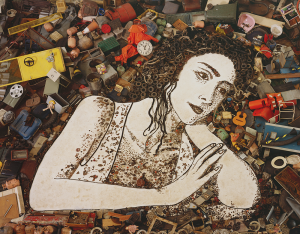
Work created by Vik Muniz

A renowned Brazilian artist.

Muniz uses unusual materials such as chocolate, toys and electronic waste to create iconic works of art.

His works explore identity, culture and sustainability.

Mandy Barker:

Work created by Mandy Barker

This British photographer uses plastics found on beaches around the world.

With them, create stunning images that highlight plastic pollution in our oceans.

El Anatsui:

Work created by El Anatsui

Originally from Ghana, El Anatsui is famous for his impressive sculptures made from aluminum bottle caps.

He assembles them artistically to form colossal and glittering works.

Examples of Upcycled Art Works

“Tire Butterflies” by Chakaia Booker:

Work created by Chakaia Booker

Using discarded tires cut into strips, American artist Chakaia Booker creates sculptures that evoke the grace and fragility of butterflies.

“Beach Trash” by Barry Rosenthal:

Work created by Barry Rosenthal

Rosenthal collects objects found on beaches and arranges them in geometric patterns to create artistic installations that highlight pollution in our seas.

“Recycled Metal Sculptures” by John Lopez:

Work created by John López

South Dakota artist John Lopez creates stunning sculptures from scrap metal, such as car parts and obsolete farm equipment.

Upcycled Art is an exciting and sustainable form of artistic expression that transforms discarded materials into unique and meaningful works of art.

Through the creativity of artists committed to sustainability, upcycled art not only inspires, but also promotes more responsible and environmentally conscious waste management.

These artists prove that beauty and meaning can be found in the most unexpected places, breathing new life into what was once considered trash.

And what do you think of Upcycled Art?

Terrifying crafts for Halloween with recycled material

Halloween is a time of year full of magic, creativity and fun.

Pumpkins, ghosts and witches flood our homes and streets, and to celebrate this terrifying day there is no better way than to get involved in some themed crafts.

But what if you want to be environmentally friendly and avoid the accumulation of more waste?

The answer is simple: Halloween crafts with recycled material!

Today we bring five creative ideas so you can transform your waste into spooky decorations.

1. Plastic Bottle Ghosts:

Ghosts are an iconic part of Halloween, and you can easily create them from empty plastic bottles.

For this craft, you will need:

  • Empty transparent plastic bottles.
  • Old fabrics or white paper.
  • Scotch tape
  • black marker

Steps:

  1. Wash and dry plastic bottles
  2. Cover each bottle with a white cloth or white paper and secure with tape.
  3. Draw creepy eyes and mouths on the bottles with a black marker.
  4. You can place an LED light inside each bottle to make the ghosts glow in the dark.
  5. Enjoy your recycled ghosts lighting up your Halloween space!

2. Cardboard Pumpkin Garlands:

Pumpkins are the classic symbol of Halloween, and you can create a pumpkin garland from recycled cardboard.

Here’s what you need:

  • Old cardboard (like cereal or cookie boxes).
  • Orange and green paint.
  • Scissors
  • Cord or thread.

Steps:

  1. Draw a pumpkin shape on the cardboard and cut it out.
  2. Paint the pumpkins orange and add green details on top.
  3. Let the paint dry completely.
  4. Poke holes in the top of each pumpkin and thread string or string through them to create your garland.
  5. Hang your pumpkin garland on your door, window or fireplace.

3. Can Candle Holders:

If you have empty cans, you can turn them into terrifying Halloween candle holders.

This is what you need:

  • Empty and clean cans
  • Black and orange paint.
  • Brushes.
  • Small candles or LED lights

Steps:

  1. Paint the cans black or orange and let the paint dry.
  2. Use a finer brush to add details like pumpkin faces or black cats.
  3. Place a small candle or LED light inside each can.
  4. Light the candles and enjoy the spooky atmosphere your recycled candle holders create.

4. Egg Carton Bats:

Bats are another classic Halloween element, and you can easily make them from recycled egg cartons.

You will need:

  • Empty egg carton.
  • Black paint.
  • Scissors
  • Sticky eyes (or paper and glue).
  • Thread or rope.

Steps:

  1. Cut the cups out of the individual egg cartons.
  2. Paint the cardboard cups black and let the paint dry.
  3. Add sticky eyes or create eyes with paper and glue.
  4. Punch a small hole in the top of each bat and thread some string or string to hang them.
  5. Decorate your home with a flock of recycled bats that seem to fly everywhere.

5. CD Spider Garlands:

Old CDs that you no longer use can be transformed into spiders to decorate your house for Halloween.

You will need:

  • Old CDs or DVDs.
  • Black paint.
  • Sticky eyes (or paper and glue).
  • Spider legs (you can use black pipe cleaners).
  • Rope or thread.

Steps:

  1. Paint the bottom of the CD or DVD black and let it dry.
  2. Add sticky eyes or create eyes with paper and glue.
  3. Attach the spider legs to the bottom of the CD.
  4. Punch a hole in the top of the CD and string some string or thread to hang it.
  5. Hang your recycled spiders throughout the house for a spooky decoration.

These Halloween crafts with recycled materials are not only fun to make, but they also help reduce the amount of waste we generate.

Take the opportunity to get creative and scare your friends and family with your recycled Halloween decorations this year!

¡Happy Halloween!

Recycle after summer holidays

Summer vacation is a time of relaxation for most.

However, they can also lead to a significant increase in the amount of waste generated.

From disposable plastic packaging to souvenirs and gifts, it’s easy to accumulate a lot of waste.

As we prepare to get back into the routine after the summer holidays, it is essential to maintain and reinforce our recycling habits at home.

Here we offer you some tips to do it effectively.

Purposes to recycle after the holidays

1. Waste Classification:

The first step to effective recycling is the proper classification of waste.

Make sure you have separate containers for paper, cardboard, glass, plastic and organic waste.

This will facilitate the recycling process and ensure that recyclable materials are not mixed with non-recyclable waste.

2. Plastic Reduction:

During the holidays, it is common to use plastic containers for fast foods and drinks.

After the holidays, try to reduce your plastic consumption.

Opt for reusable containers instead of disposable bottles and containers.

Not only will this reduce the amount of waste you generate, but it will also help combat plastic pollution.

3. Creative Reuse:

Before getting rid of items you no longer need, consider whether they can have a second life.

Glass bottles, for example, can become beautiful decorative lamps.

Plastic containers can be used to store food or as pots for plants.

Creative reuse can help you reduce your carbon footprint.

4. Composting:

If you have organic waste, such as food scraps, fruit and vegetable peelings, consider starting composting at home.

Composting is a great way to reduce the amount of waste that ends up in landfills while creating a natural fertilizer for your plants and garden.

5. Family Education:

Involve the whole family in the recycling process. Teach them the importance of properly sorting waste and reducing plastic consumption.

You can turn it into a family game or challenge to make it more fun and motivating.

6. Electronic Recycling:

If you purchased new electronic devices or threw away old ones during the holidays, be sure to recycle them properly.

Electronics contain valuable components and harmful substances that must be managed properly.

Check electronics recycling locations in your area.

7. Selective Collection Program:

Find out about the selective collection program in your community.

Cities often offer collection services for recyclables, such as paper, cardboard, glass and plastic.

Make sure you actively participate in these programs.

8. Responsible Purchase:

The key to reducing waste is making responsible purchases.

Before purchasing a product, consider its durability and whether it is recyclable or not.

Opt for products with less packaging and look for sustainable alternatives.

9. Donations:

If you have items that you no longer need but are in good condition, consider donating them instead of throwing them away.

This not only reduces the amount of waste, but can also help those in need.

10. Maintain Consistency:

Recycling shouldn’t just be a post-vacation habit.

You must maintain it throughout the year.

Set reminders and remain consistent in your efforts to care for the environment.

After the summer holidays, it is important to reflect on our consumer habits and their impact on the planet.

By following these tips and maintaining a constant commitment to recycling, each of us can contribute significantly to the conservation of the environment and the creation of a cleaner, more sustainable world for future generations.