Plastic recycling processesplastic

In this article, we will explore the plastic recycling process in detail.

Plastic is a ubiquitous material in our modern society.

This presents significant challenges in terms of waste management and environmental sustainability.

A key solution to mitigate these problems is plastic recycling.

The Plastic Recycling Process

1. Collection and Classification

The recycling process begins with the collection of used plastics.

These plastics can come from domestic, commercial or industrial waste.

Subsequently, a rigorous classification is carried out to separate the different types of plastics according to their composition and characteristics.

2. Shredding

Sorted plastics are crushed into small fragments, known as flakes.

This stage is essential to increase efficiency in the following phases of the process.

3. Washing and Decontamination

The plastic flakes undergo an intensive washing process to remove impurities, dirt and debris.

In addition, a decontamination process is carried out.

This process is to remove any unwanted chemicals or materials.

4. Extrusion or Granulation

The clean, decontaminated flakes are melted and shaped into plastic granules or pellets.

These granules become the raw material for the manufacture of new products.

5. Manufacture of Products

Recycled plastic pellets are used to make a wide variety of products,

This includes everything from containers and bottles to textiles and automotive components.

Subsequent Applications of Recycled Plastic

Containers and packaging:

Recycled plastic packaging is widely used in the food and beverage industry.

In this way they reduce the dependence on virgin plastics and contribute to the reduction of waste.

Clothing and Textiles:

Recycled plastic bottles can be turned into textile fibers.

Later they are used in the manufacture of clothing, carpets and other textile products.

Construction:

Recycled plastic is used in the manufacture of construction materials, such as pipes, panels and profiles.

Urban Furniture:

Benches, tables and other items of street furniture can also be made from recycled plastic.

Benefits of Plastic Recycling

Waste Reduction:

Plastic recycling reduces the amount of plastic that ends up in landfills and the environment.

Thus reducing pollution.

Conservation of Natural Resources:

By using recycled plastic instead of virgin plastic, the extraction of resources and the energy required to produce new materials are reduced.

Reduction of the Carbon Footprint:

Making recycled plastic typically has a lower carbon footprint than virgin plastics.

This fact contributes to the fight against climate change.

Promotion of the Circular Economy:

Plastic recycling is a cornerstone of the circular economy.

It is based on the fact that materials are recycled and reused instead of being thrown away.

Examples of Products Made with Recycled Plastic

Water bottles:

Many bottled water brands are using recycled plastic in their packaging to reduce their environmental impact.

Reusable Bags:

Reusable bags made from recycled plastic are a sustainable alternative to single-use bags.

Outdoor Furniture:

Garden and outdoor furniture made from recycled plastic is durable and weather resistant.

Sustainable Textile Fibers:

Clothing and textiles made from recycled plastic offer a greener option in the fashion industry.

In conclusion, plastic recycling is an essential process to address the waste management and environmental sustainability challenges associated with this material.

Through a process that involves the collection, classification, crushing and manufacturing of new products.

In this way, recycled plastic becomes a valuable raw material for a variety of applications.

Visit our website www.bplplastic.com and learn all about plastic recycling.


Summer crafts with recycled plastic

Summer is a perfect season to explore our creativity and enjoy outdoor activities.

In today’s article, we propose a series of summer crafts using recycled plastic, offering fun and environmentally friendly ideas.

Not only will you keep yourself busy during the warmer months, but you will also contribute to reducing your environmental impact.

So get to work and enjoy a creative and eco-friendly summer!

Pool Toy Boat:

Who doesn’t enjoy a nice dip in the pool on hot summer days?

With recycled plastic, you can create toys to enjoy in the water.

You can make toys like boats using plastic bottles and other recycled materials.

Take note:

  1. Wash and dry a large plastic bottle with a lid.
  2. Poke a hole in the center of the lid large enough to pass a thin string through.
  3. Decorate the bottle by painting it with acrylic paint or sticking on stickers.
  4. Make a sail for the boat by cutting a triangular shape out of a plastic bag or waterproof paper.
  5. Thread the string through the hole in the top and tie one end to a stick or small branch to make the neck.
  6. Attach the sail to the mast using waterproof tape.
  7. Your toy boat is ready to sail in the pool!

Give free rein to your imagination and have fun in the water in a sustainable way!

Garden lamps and lanterns:

Take advantage of the warm summer nights and create a cozy atmosphere in your garden with lamps and lanterns made from recycled plastic.

Gather transparent bottles of different sizes and colors and put LED lights inside.

You can hang them on tree branches or place them on the ground to illuminate pathways.

You only need:

  • bottle lamp:
    1. Wash and dry a clear glass bottle.
    2. Insert a string of LED lights inside the bottle.
    3. Make sure the wire from the lights comes out of the opening in the bottle.
    4. Place the bottle upside down on a flat surface.
    5. Connect the lights and enjoy a beautiful bottle lamp that will illuminate your garden at night.
  • Plastic Lantern:
    1. Gather several clear plastic bottles of the same size.
    2. Cut the bottles in half and discard the bottom.
    3. Decorate the tops of the bottles with acrylic paint, permanent markers, or stickers.
    4. Attach the tops of the bottles together using strong plastic glue or clear tape.
    5. Place an LED candle inside the lantern.
    6. Light the LED candle and enjoy a bright and ecological lantern in your garden.

In addition to being a great way to recycle plastic, these lamps will add a magical touch to your nights outdoors.

Pots and planters:

If you love gardening, summer is the perfect time to grow your own plants.

Instead of buying new pots, you can create your own pots and planters using recycled plastic.

Reuse food containers, such as jars or cups, and give it a creative touch by painting or decorating them with natural elements such as seashells or stones.

Indications:

  • Bottle pot:
    1. Wash and dry an empty plastic bottle.
    2. Cut the top of the bottle, just below the part where the neck begins.
    3. Decorate the bottle with acrylic paint, colored paper, or any other decorative material.
    4. Poke small holes in the bottom of the bottle to allow water to drain.
    5. Fill the bottle with soil and plant your seeds or small plants.
    6. Place the pot in a sunny location and water it regularly.
  • Cup planter:
    1. Wash and dry a disposable plastic cup.
    2. Decorate the mug with acrylic paint, permanent markers, or stickers.
    3. Poke several holes in the bottom of the cup to allow water to drain.
    4. Fill the cup with soil and plant your seeds or plants.
    5. Place the planter in a suitable place and water it according to the needs of your plants.

These recycled pots will not only be a home for your plants, but also an expression of your creativity and commitment to the environment.

Enjoy the creative process and have fun with these summer crafts using recycled plastic!

Always remember to be aware of the environment and properly recycle the materials used.


Do you know what biodegradable plastic is?

Biodegradable plastic has become an increasingly popular option in fighting pollution and promoting a sustainable future.

Unlike conventional plastic, this material has the ability to decompose naturally and without leaving toxic residues in the environment.

In today’s article, we tell you what biodegradable plastic is, its uses and the benefits it offers.

What is biodegradable plastic?

It is a material that breaks down through biological processes into natural elements, such as water, carbon dioxide and biomass.

It is made using renewable sources, such as corn starch, and is often blended with natural polymers to increase its strength and durability.

Although its decomposition time can vary, it generally disintegrates in a shorter period than traditional plastic, thus reducing its environmental impact.

Uses of biodegradable plastic

Biodegradable plastic can be used in a wide range of applications.

In this way, it replaces conventional plastic in numerous products.

Some of the more common uses include:

Packaging:

It is used in the manufacture of food containers, shopping bags and bottles.

These products are becoming more and more popular in supermarkets and shops.

This is because they help reduce the accumulation of plastic waste and its impact on ecosystems.

Agriculture:

In agriculture, biodegradable plastic is used in the production of films and sheets to cover crops.

These materials protect plants from weeds and pests, while breaking down naturally without leaving harmful residues in the soil.

Packaging of cosmetic products:

Many cosmetic companies are turning to biodegradable packaging for their products, thus reducing their environmental footprint and offering more sustainable options to consumers.

Benefits

The use of biodegradable plastic carries several significant benefits for the environment and sustainability:

Pollution reduction:

By breaking down naturally, biodegradable plastic prevents the accumulation of plastic waste in oceans, rivers and landfills.

This reduces pollution and protects marine and terrestrial life.

Resource savings:

Unlike conventional plastic, which is derived from petroleum, biodegradable plastic is made from renewable sources, such as plants and biomass.

This decreases dependence on fossil fuels and helps conserve natural resources.

Promotion of the circular economy:

Biodegradable plastic can be part of a sustainable life cycle.

It can be recycled or composted, allowing its reuse in new products or its return to nature as an organic fertilizer.

In summary, biodegradable plastic represents a promising and sustainable alternative to conventional plastic.

Its ability to break down naturally, along with its various uses and environmental benefits, make it an attractive option for reducing plastic pollution and promoting a cleaner future.

By choosing products made from biodegradable plastic, we can contribute to a positive change in the environment and advocate for a more sustainable lifestyle.

If you are interested in recycling, visit our website.

Do you know what littering is? We tell you

Littering. It may not sound like it to you, but it is a concept that, unfortunately, is becoming more and more current.

In today’s article we tell you what exactly it is and how we can prevent it.

What is littering?

Littering is a term used to refer to the garbage found in the environment, such as plastics, bottles, cans, bags, among others.

This problem is increasingly common and has serious consequences for the environment, and it is a global problem.

We are fully aware of the negative impact that many of our actions have on nature.

Currently, it is estimated that there are around 8 million tons of plastic in the oceans, for example, which is having a negative impact on marine fauna and water quality.

Plastic waste also affects terrestrial ecosystems, since it contaminates the soil and can affect the health of the flora and fauna that inhabit it.

How many times have we gone out for a walk in the countryside and found bottles, cans and other waste lying around in the middle of nature?

What consequences does littering have?

Littering has serious consequences for the environment:

  1. Soil contamination: Plastic waste and other debris can contaminate the soil, which can affect the health of the flora and fauna that inhabit it.
  2. Water pollution: Litter can also contaminate water, both in rivers and oceans, which can affect water quality and marine life.
  3. Impact on fauna: Plastic waste can be confused by marine and terrestrial fauna with food, which can cause harm and even death to animals.
  4. Impact on the climate: Littering can also have an impact on the climate, since some materials, such as plastic, take years to decompose and can release greenhouse gases.
  5. Increases the risk of forest fires: A glass bottle exposed to the sun can start a fire.
  6. It can increase the risk of flooding: Depending on the area where we throw garbage, it can end up in the drains, clogging them.

It is important to take steps to reduce the amount of waste we produce and to properly recycle the materials we use to reduce our impact on the environment.

Actions to prevent and eliminate littering

Recycling is one of the most effective solutions to combat it.

By recycling, you reduce the amount of waste going to landfills and use less energy to produce new products.

Plastic recycling, in particular, is one way to combat litter, since plastic is one of the main pollutants in the environment.

We also have to do our part, if we go out to the field we must collect all our waste and leave nothing behind.

Just like if we go to the beach or any other natural environment.

Even if we don’t get dirty, we can also help by cleaning up what, unfortunately, others have made dirty.

If we go to the field to spend the day and see that there is rubbish around us, we can pick it up and throw it away with our waste.

It would also be convenient to influence environmental education, holding workshops in schools and institutes, for example.

If we teach our children and youth to take care of the environment, they will always do so.

In conclusion, littering is a serious problem that affects the environment.

If we all come together in this effort, we can make a big positive change on our planet.


fishing net recycling

Recycling, whatever the material, is an important way to help the environment.

One of the lesser known forms of recycling is that of fishing nets.

In today’s article we talk about everything we can do by recycling this material.

Fishing nets and the seas

Fishing nets are a common problem in the seas and oceans.

When these deteriorate or break, many animals can become trapped in them.

This poses a serious danger to marine life and can cause extensive damage.

Its recycling means not only avoiding this type of solution, but also giving it a second life and turning it into something useful.

What products can we obtain with the recycling of fishing nets?

When fishing nets are recycled, a variety of different products can be obtained.

Thread

One of the most common ways to recycle fishing nets is to turn them into yarn.

Yarn from recycled fishing nets can be used to make a variety of different products, including shopping bags, garden netting, and more.

This recycled yarn is strong and durable, making it ideal for use in products that require strength.

Fashion

Furthermore, they can also be used to create fashion products.

Fashion designers have been using recycled fishing nets to create clothing and fashion accessories for years.

Its texture and pattern can create unique designs that are modern and sustainable at the same time.

Sport products

Another common use for recycled fishing nets is in the creation of sporting goods.

They can be used to make soccer balls, basketballs, tennis nets, and more.

These recycled sports products are durable and strong, and feel just as good as products made from traditional materials.

Industrial products

In addition to the products mentioned above, they can also be used to make a variety of industrial products.

For example, to create safety nets for construction, as well as for the protection of bridges and buildings.

They can also be used as filler material to create rugs and rugs.

Recycling fishing nets is not only good for the environment, but it can also be good for the economy.

You can help create jobs and promote the local economy. and most importantly, it helps reduce the amount of waste that ends up in the seas and oceans.

Spring crafts with recycled plastic

We are already in Spring and the Easter holidays are very close to us with the children at home for two long weeks.

It is the perfect moment for us to encourage ourselves to make a craft to bring joy to our home and we will also have the little ones entertained.

In today’s blog we bring you a few Spring crafts made with recycled material.

The importance of recycling

Plastic is a material widely used in our daily lives, but it is also one of the materials that pollute our planet the most.

That’s why recycling plastic is so important to reduce the environmental impact of its production and disposal.

From Baidal we always encourage recycling those materials whose recycling is possible.

We can also reuse them to give them a second life.

With plastic we can make a multitude of crafts like the ones we tell you about below.

Spring crafts with recycled plastic

Some creative spring craft ideas you can make using recycled plastic.

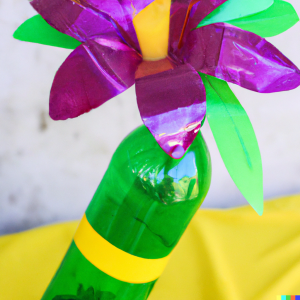
plastic bottle flowers

Flower craft made with recycled plastic

Plastic bottles are one of the most common materials that can be recycled.

To make flowers, we simply cut off the top of the bottle and then cut the petals at the bottom.

We can paint them with acrylic paint and stick them to a wooden toothpick to make a nice bouquet of flowers.

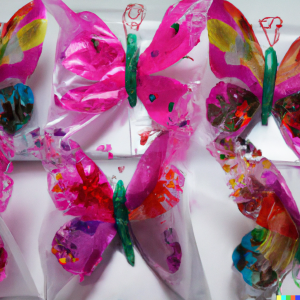
Butterflies from plastic bags

butterfly craft made from plastic bags

Plastic bags are another material that can be easily recycled.

To make butterflies, we cut a plastic bag in the shape of a butterfly and attached it to a rod or wire so that they can move.

We can also paste several butterflies on a mural to give our house a spring touch.

plastic pots

Plant pot craft made with recycled plastic bottles

Plastic pots are very useful for planting flowers and plants.

We can make our own recycled plastic pots using plastic bottles cut into the desired shape.

We just have to paint the pots with acrylic paint as we like and put them in the garden or at home.

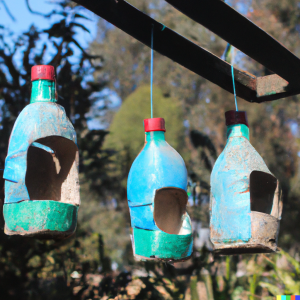
Bird feeders with plastic bottles

bird feeder craft made from recycled plastic bottles

Plastic bottles can also be used to make bird feeders.

We cut off the top of the bottle and make holes in the sides so that the birds can access the food.

We can paint the bottle with bright colors to attract birds and hang the feeder on a tree or on the balcony.

plastic lamps

We can also use plastic bottles to make decorative lamps.

We cut off the bottom of the bottle and put a candle inside.

We painted the bottle with bright colors to give it a spring touch that will look great.

These are just a few spring craft ideas that can be made using recycled plastic.

Remember that recycling plastic is an important way to reduce our environmental footprint and do our part to protect our planet.

If you want more information about plastic recycling, visit our website.

Tips for recycling in your company

By now we all know about the importance of recycling. But in addition to recycling at home, we can also encourage recycling in our office.

We spend a lot of time in our workplace and we must become aware of and get involved with recycling just like we do at home.

Recycling in the office is an important practice to contribute to caring for the environment.

However, many times we do not know how to start or what to do to achieve effective recycling in the office.

In today’s article we give you some tips and tricks to recycle in our company.

Tips for recycling in the office

The first thing we must do is identify the materials that can be recycled in our office.

Generally, these include paper, cardboard, plastic, glass, and metals.

To facilitate the separation of these materials, we can place recycling bins in different areas of the office, such as in the kitchen, in the meeting room and in the work stations.

It is important that bins are properly labeled so that employees know what materials to put in each one.

In addition, we must ensure that the containers are large enough and are emptied frequently to prevent them from filling up quickly.

Another important tip for recycling in the office is to reduce the use of paper.

We can do this by using double-sided printing and avoiding printing unnecessary emails and documents.

In addition, we may choose to use emails instead of printing and sending documents.

We can also reuse materials in the office.

For example, we can use envelopes and folders again and refill coffee cups instead of disposable cups.

In this way, we not only reduce the amount of waste we generate, but we also save money.

Another tip is to look for ways to recycle materials that cannot be deposited in conventional recycling bins.

For example, we may recycle printer ink and toner cartridges at specialty stores or through manufacturer recycling programs.

Similarly, discarded electronic equipment should be taken to specialized recycling centers.

The importance of promoting recycling in the company

Fostering a culture of recycling in the office is a highly recommended practice.

We can do this by educating and raising awareness among employees about the importance of recycling and the positive impact it has on the environment.

We can run information campaigns and offer incentives to employees who recycle more.

In summary, recycling in the office is an important practice that we can implement with some basic advice.

In this way, we contribute to caring for the environment and creating a more sustainable work environment.


Do you know what the ecological footprint is?

Surely you have heard of the ecological footprint. Everything we do leaves an imprint around us.

Browsing the Internet, each web page we visit or each photo we post on a social network leaves a digital footprint in our wake.

The same thing happens with the environment, each of our actions has an impact.

In today’s article we tell you what the ecological footprint is.

What is the ecological footprint?

The ecological footprint is the impact that each human being has on the planet.

It is also known as environmental footprint and is measurable.

For this, it is necessary to calculate the ecologically productive area necessary to re-produce the resources consumed by a person.

To this is added the necessary surface to absorb the waste generated by that same person.

The ecological footprint serves as an indicator to know the sustainability of human activities.

It is as if each one of us asks ourselves: how many crops, pastures or forests are necessary to cover my lifestyle?

Maybe we don’t give it the necessary importance, but each of our actions has a consequence.

From what we eat to what clothes we buy, including the means of transport we use.

Everything influences the footprint we leave on the planet.

The great importance of the ecological footprint

Expressing with numbers the impact that the different activities that people carry out have on the earth is a great means of raising awareness.

Being aware of the consequences that our way of life has on the environment invites us to reflect on our lifestyle.

In addition to understanding the environmental responsibility that each individual has.

By knowing first-hand the impact of our actions, it is easier for us to become aware and look for other alternatives to some aspects of our routine to minimize that footprint as much as possible.

How to calculate the ecological footprint?

To calculate our ecological footprint, these factors must be taken into account:

– The planet’s biocapacity, which is the planet’s capacity to generate resources.

– Human activity, which corresponds to the resources consumed and discarded by people.

There are calculators that, through a brief questionnaire, can indicate our ecological footprint.

You can try the Fundación Vida Sostenible Calculator.

How can we reduce our ecological footprint?

We can reduce our ecological footprint by putting into practice a series of actions in our day to day.

  • Recycle and reuse as many materials as possible. For this, it is very important to correctly separate our waste and throw it into its corresponding containers.
  • Use renewable energy sources.
  • Reduce meat consumption.
  • Use organic products
  • Buy low-energy appliances.
  • Use less polluting means of transport and walk whenever possible.
  • Optimize the use of water and not waste it.

Doing our part we can try to return to the planet everything we are taking from it.

Put these tips into practice and minimize your ecological footprint. Together we can take care of the environment.


Summer crafts with recycled material

Summer has arrived and with it, the school holidays. Crafts are usually an activity that children love and also quite entertaining.

In today’s post we show you some typical summer crafts that are made with recycled material.

Take notes and have fun.

Piñatas with recycled material

There is nothing that children like more than a piñata.

The thrill of being able to open it and collect everything that is inside is something very fun for the little ones.

Also, making a piñata at home is very easy, we will only need:

  • A cardboard box.
  • Paper or fabrics that we have at home. If we don’t have we can buy tissue paper.
  • Scissors
  • Glue
  • The sweets or toys that we want to put inside.

How to make our piñata from recycled material?:

  • We choose the shape we want for the piñata: ice cream shape, watermelon slice, beach ball…
  • We cut recycled cardboard.
  • We glue the strips of fabric or paper all over the cardboard.
  • We introduce surprises. We must remember to leave an open space in the box to put the surprises, then we close it.

Fuente: https://www.pinterest.es/pin/140806229600366/

We already have our piñata made of recycled material, now we just have to have fun.

little fish with plastic bottles

This craft is very simple and we need very few materials:

  • Empty plastic bottles.
  • Permanent markers.
  • Gomaeva

To make our fish with recycled material we just have to cut the bottom of the bottle to shape the mouth of the fish.

Then we cut the flaps with foam, although we can also make the flaps with plastic from another empty bottle.

We paint and decorate our fish with the colors that we like the most.

Fuente: https://es.pinterest.com/pin/366480488411823947/

With plastic bottles we can also make a very nice octopus and complete our marine fauna.

https://i.pinimg.com/1200x/7e/15/97/7e15970ee24b49d1b64d9e8c6d9b27c4.jpg

Fuente: https://www.pinterest.es/pin/AS0kHMtKDu8xvRSxo4dtjXqTV2mDCJDuiLnKCf0CmN2RkHVfG8yUPbk/

Mermaids with spoons of recycled material

Summer is the time for barbecues and gatherings with family and friends.

Many of us use disposable utensils to save ourselves from washing up afterwards.

Before the vast majority were made of plastic, now there are other materials that luckily we can reuse again.

But we can also give them another use once used.

With spoons, for example, we can create fun little mermaids.

Fuente: www.pinterest.es

We just need:

  • disposable spoons
  • Cardboard, fabric or any element that we have at home that we can use to make the hair and tail of the mermaids.
  • Felt pens.
  • glitter (optional)
  • Glue

The wide part of the spoon is the mermaid’s head and all we have to do is glue the different elements to make her hair and tail.

We can decorate it with glitter.

Boats with tetrabrik containers

Another thing that is always at home is some food or drink in tetrabrik.

Well, this material can be very useful for us to create beautiful boats with which our children will have a blast.

Need:

  • Tetrabriks
  • Markers or watercolor paints
  • A long toothpick, (like the one used for skewers)
  • Cardstock or fabric to make the candle
  • Glue

Making the boat is very simple:

We put the container horizontally and cut out a part to create the interior of the boat.

On the side we cut out two circles to make the windows.

Then we paint and decorate it as we like.

We make a candle with the toothpick and with the cardboard or the fabric that we have chosen and we stick it on the tetrabrik.

We already have our boat.

There are many crafts that we can do with recycled material and objects that we have at home, so be imaginative and have fun 😉

If you know any summer crafts with recycled material, share it with us!


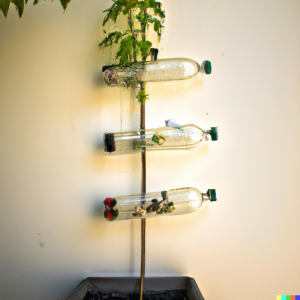
Recycle your plastic bottles and make planters for your house

Although we try to reduce the consumption of plastic at home, there is always something that we have to end up buying. If you have plastic bottles at home, you can deposit them in the yellow container for recycling.

And you can also keep some to make some very original planters for your house or your terrace.

We tell you how in today’s article.

The importance of recycling plastic at home

As you know, there are small gestures that we can do on a daily basis to reduce the impact and consumption of plastic at home.

Use cloth bags instead of plastic bags, replace plastic with glass whenever possible or use disposable cardboard cutlery when we have a barbecue with friends, for example.

But it is true that we cannot completely banish plastic from our lives and that is where recycling comes into play.

It is very important that all the plastic that we consume at home and is likely to be recycled, we recycle it.

Either depositing it in the corresponding container, the yellow one in this case, or reusing it at home for some purpose.

Homemade pots made from plastic bottles

In this case we suggest you make some planters for your home or to decorate your terrace from plastic bottles.

Source: Pinterest

If you have a plastic bottle of water or soft drink at home, it will be perfect for this craft.

Take note and we’ll tell you how.

Necessary materials:

  • A plastic bottle (water or soft drink will do).
  • Paint in case we want to paint the bottle of some color, although we can also leave it transparent.
  • A marker.
  • Scissors.
  • Soil for plants.
  • The plants that we want to place in the pot.
  • A piece of string or cloth to decorate.
  • Pebbles to decorate.
  • Four small doorstops to act as legs for our planter.

Steps to make the pot

  • First of all, we measure and mark where we are going to cut the bottle. In this case we are going to cut it horizontally.
  • We cut the bottle.
  • We remove the label from the bottle.
  • We can leave it as it is transparent so that the soil in the pot is visible or we can paint it with a color that we like.

Source: Pinterest

  • We glue the stops at the bottom as legs.
  • To decorate the cap, we tie a piece of string or a piece of fabric that we like.
  • We put the land.
  • We put the plants.
  • We can put some pebbles above the ground as a decoration.

We already have our planter ready! we can make as many as we want and paint them in different colors.

Share with us your crafts with which you recycle plastic at home.