Recycling of coffee grounds

Thanks to the recycling of coffee grounds, a soft, light, flexible and breathable fabric is achieved.

In addition, garments made from this fabric are resistant to water, UV rays, keep you cool and have odor control properties.

That is why Ecoalf is committed to recycling coffee grounds to make its garments.

The process of recycling coffee grounds is as follows:

– Initially, the grounds are collected in a chain of coffee shops.

– As the used powder is still wet, it is first dried.

– The oil is extracted and the bottom of the coffee is ground until it becomes a powder.

– Then it is transformed into granules that come out of its mixing with recycled polyester polymers.

– And finally, the thread is created.

Negative aspects of the process

As a negative aspect of the coffee grounds recycling process, only one has been found:

– Drying coffee is expensive, as the humidity of the coffee grounds ranges between 60 and 70%.

Positive aspects of the process

Regarding the positive aspects, the following stand out:

– The by-products made through this process, such as pellets, provide 20% more heat and decrease the amount of ashes produced by 10% compared to wood.

– The economy is boosted, since this process creates new jobs.

– It involves savings, since it is a fairly inexpensive process.

– Another of the by-products that can originate through this process is compost. This is much more ecological and economical and among its qualities are the hydrogenation of the earth, since chemical elements are eliminated from other fertilizers.

Today’s blog ends here!

We hope you liked it a lot!

If you want to see more about us, do not hesitate to follow us on our social networks.


PLASTIC PET: POSITIVE AND NEGATIVE ASPECTS

Today we come to tell you about the many advantages that recycling PET bottles brings.

Although there are many positive aspects, there are also others that are negative.

In today’s blog we take you a bit into this incredible world.

Let’s go there

PET bottles

Negative aspects of the pet:

The main problems that arise with PET are:

– His deposition.

– Notorious presence in the channels of superficial currents and in the drainage.

– Causes clogging and difficulties in the deszolve processes, facilitating

floods.

– Generates garbage.

Currently, it is known that around 9 million bottles are produced each year

of PET, which represent almost a third of the domestic waste generated. Annually, 90 million bottles of soft drinks and purified water are thrown onto public roads, forests and beaches.

These bottles take up to 500 years to degrade.

Promoting the recycling of these bottles is an urgent measure, first with regard to public cleaning and effective management of the integral management of waste, to avoid its accumulation in sanitary landfills and also because it is necessary to move towards a sustainable economy that saves raw material and energy resources.

Positive aspects of the pet:

The main aspects that arise positively after the study carried out are the

which are attached below:

It acts as a barrier for gases such as CO2.

– It is transparent and crystalline, although it admits some colorants

– Unbreakable

– Waterproof

– It is not toxic to a certain degree (necessary quality for this type of products that

are available to the general public).

– It is Inert

– It is resistant to permanent efforts and wear, as it has high rigidity

and toughness.

– It has high chemical resistance and good thermal properties, since it has a great non-deformability to heat.

– It is fully recyclable

– It contains a high resistance to folding and low moisture absorption that make it very suitable for the manufacture of fibers.

For the manufacture of this material, some strategies are implemented to minimize adverse impacts to the environment during production, such as the use of natural gas as an energy source, as well as the control of emissions into the atmosphere through thermal oxidants and the treatment of sewage water.

PET bottles

Production lines:

PET is currently used in three production lines:

PET textile

Used to manufacture synthetic fibers, mainly polyester. It is used for the manufacture of clothing fibers and for filling duvets or pillows, as well as being used in industrial fabrics to manufacture other products such as rubbers and canvases.

PET bottle:

Used to manufacture bottles due to its great resistance to chemical agents, great transparency, lightness and lower manufacturing costs.

PET film:

Used in large quantities for the manufacture of photographic, X-ray and audio film.

Reintegrating this polymer is a new cycle of matter. The general objective is to show an alternative mechanical recycling process aimed at the manufacture of short polyester fibers.

We hope you liked today’s bloga lot!

See you soon!

Although you can follow us on our social networks if you want to see more about us.

See you!

What is compost? 5 tips to do it at home

Compost or compost is a product obtained from different materials of organic origin, which are subjected to a controlled biological oxidation process called composting.

It has an earthy appearance, free of odors and pathogens, it is used as a base fertilizer and as a partial or total substitute for chemical fertilizers.

For anyone who is new to composting, or for those who simply want to improve their compost, we have put together a summary so that you can get it.

In today’s blog, we bring you 5 tips to do it at home. We will tell you about it in the following lines!

Fundamental keys to compost

The 5 fundamental keys are:

Buy a proper compost bin

If you are going to buy a compost bin, we recommend that it be not very large, as it will be perfect for a small garden or patio.

Choose the perfect place to leave it

It’s best placed in a well-drained, level spot, which will prevent excess water and help worms get in and get on with the job of breaking down the contents.

Let the worms do the hard work

Nature has provided us with the perfect waste disposal solution: worms. They can live their whole lives in the dark, and they also love the humid atmosphere.

On the other hand, they will eat the waste material you put in and turn it into compost.

The tiger worm is the most efficient worm we know of, and it loves to eat organic waste.

Put the correct elements

Things that make for good compost include vegetable peels, fruit waste, tea bags, plant pruning, and grass cutting. These decompose quickly and provide significant amounts of nitrogen and moisture.

It’s also good to include things like egg cartons, crumpled paper, and fallen leaves. These rot more slowly, but provide vital fiber and carbon; They also allow significant pockets of air to form in the mix. Crushed eggshells can be included to add helpful minerals.

Let the air in

Adding crumpled pieces of cardboard is an easy way to create pockets of air that will help keep compost healthy.

Air can also be added by mixing the contents.

Today’s blog ends here.

We hope you liked it a lot!


Recycled material furniture The most ecological decoration

Apart from energy efficiency, if you want to give your home an ecological touch, opt for types of furniture that use recycled materials for their construction.

Ecological awareness is increasingly present and we pay more and more attention to the world around us.

This concern for the environment is expressed in our homes, choosing more energy efficient homes.

But what about the interior?

Recycled material furniture: recycled and recyclable

One of the pioneers of this type of design is the French Philippe Starck, who in 2012 created the Broom chair.

Source: Pinterest

Made with recycled and recyclable material in its entirety.

The components and waste generated for its production can be divided into wood and plastic to be able to be used again.

One of the newest names to appear in the world of furniture design is Pentatonic.

Pentatonic is a design and technology company that operates in what is known as a circular economy.

This means that they design and create beautiful products and consumer goods that allow a more sustainable and responsible way of daily life, and that can be recycled as many times as desired.

The British company recently unveiled its first collection of home furnishings and accessories made from smartphones, soda cans and cigarette butts at the London Design Festival.

At the same festival, Benjamin Hubert presented his Axyl collection, created for Allermuir, in which he uses recycled aluminum, wood and nylon to make furniture.

The Milo table, by French designer Tristán Titex, uses recycled cutouts from wooden planks and antique furniture.

PET: infinite possibilities

If we talk about recycling, there is something that we cannot forget, and this is PET plastic bottles.

Today, the use of recycled plastic bottles extends far beyond school crafts.

Last year, Ikea decided to create a kitchen made from recycled plastic bottles.

Cardboard furniture

Still don’t have a cardboard furniture at home?

If the answer is no, it sure won’t take you long to do it.

This type of furniture is much more resistant than we think, and there are already countless firms that launch proposals for furniture made with cardboard.

Beds, tables, chairs, sofas … Having a cardboard piece of furniture today is a must.

Source: www.elpais.com

What are you waiting for to be the coolest of the gang of friends? Jump into sustainability!

We hope you have enjoyed the theme.

And that at least it serves so that there are more people who begin to raise awareness about sustainability.

It is necessary and there is no planet B!

If you liked it, do not hesitate to leave it in the comments!

10 things you didn’t know about the ozone layer

This coming September 16 is the international day for the preservation of the ozone layer.

In today’s post we tell you what it is exactly and 10 things you probably did not know about this essential element for life.

What is the ozone layer?

The ozone layer or ozonosphere is the area of ​​the Earth’s stratosphere that contains a relatively high concentration of ozone.

This layer, which extends from approximately 15 km to 50 km of altitude, gathers 90% of the ozone present in the atmosphere and absorbs 97 to 99% of low-frequency ultraviolet radiation.

This absorption is essential for life on our planet, hence the great concern that it disappear and therefore the immense importance that we preserve it.

10 things you didn’t know about the ozone layer

  1. The ozone layer was first observed in 1912 when Antarctic explorers said they had seen veil-like clouds in the polar stratosphere.
  2. Ozone began to be controlled in 1956 when the Halley Bay Observatory was established in Antarctica.

  1. The ozone layer is also studied from different satellites and aircraft.
  2. Ozone acts as a filter, or protective shield, against harmful, high-energy radiation that reaches the Earth, allowing others to pass through, such as long-wave ultraviolet, which in this way reaches the surface.
  3. The apparatus for measuring ozone in the stratosphere is called a spectrophotometer and was created by the British meteorologist G.M.B Dobson.
  4. Ozone concentration is measured in Dobson units in honor of this meteorologist.
  5. Its chemical formula is O3.
  6. Ozone closest to Earth removes pollutants from the atmosphere.
  7. Chlorofluorocarbons (CFCs) are the biggest culprit in the hole created and can be found in aerosols, air conditioners, refrigerators … among others.
  8. The ozone layer is located in a strip located between about 20 and about 30 kilometers above us.

The future of the ozone layer

It is believed that the ozone layer could be fully recovered by 2060, if protective measures continue to be applied.

These measures are included in the Montreal Protocol.

The use of industrial refrigerants and some aerosols have been destroying it for years.

Luckily measures are already being taken in this regard and various studies have shown that he is recovering little by little.


Kids and recycling Tips for children to learn to recycle

As we have already commented in previous posts, recycling must be incorporated into our day to day as one more routine. Many of us already have it fully assimilated

We know that children are sponges that get used to what we teach them very quickly, so it is very important to teach them to recycle at home from an early age.

In today’s post we give you a few tips so that you can learn to recycle and incorporate that learning into your day to day life.

The importance of teaching children to recycle

As parents, one of the things we want is that our children grow up healthy and happy in a preferably better world than we have now, (pandemic through).

A fundamental part of this purpose is to take care of the environment and be respectful of nature and this teaching is what we must transmit to our children.

It can be explained to a child that paper is obtained from trees and so that they do not disappear, we must try to spend as little paper as possible and that for this we can reuse dirty leaves to draw pictures, for example.

If we also explain that this is important because trees generate oxygen and are essential for the life of many animals, they will understand the true importance of recycling.

Children thus understand that their actions have consequences and that by spending less paper or throwing a plastic bottle where it belongs, they are helping to take care of the planet.

Explain the concept of the three r’s

To better understand the concept of recycling, we can explain the rule of the three R’s, which consists of:

– Reduce spending This can come in handy given the tendency of children to ask for everything. Podemos explicarles que no hay que comprar por comprar porque es perjudicial para la naturaleza

– Re-use We must make the most of everything we can. There are objects that we can surely fix and continue to use or use for another purpose.

There are many ideal crafts to do with children with empty cans or glass jars that we can decorate to use as jars to store markers, for example.

We will have a fun time with them and they will see that we can reuse many objects from our day to day.

-Recycle Putting different containers at home for each of the waste will stimulate the little ones in the house to collaborate in recycling.

We must teach them what type of waste each color corresponds to and place them in an accessible place for them. This way they will get into the habit of throwing the garbage where it belongs.

When it comes to taking it to the container, they can accompany us and help us deposit it where it belongs.

If they feel part of the whole process, it will not cost them to do it regularly at home, learning to recycle as a routine in their day to day.

Values ​​that recycling teaches them

In addition to the very value of recycling and caring for the environment, recycling teaches children to be responsible, since they have to take care of throwing waste where it belongs.

It also teaches them the importance of order, that everything must be put in its proper place, it instills in them that it is necessary to be careful and protect nature as much as possible.

It also helps them promote creativity, when it comes to reusing objects, many crafts can be made with which they will have fun and use their imagination to reconvert certain objects into others.

Let’s teach our children the importance of recycling and we will be giving them a great gift.


Decorate your house for Halloween with recycled materials.

You don’t need to buy plastic things to have fun on Halloween!

In today’s blog, we want to give you some ideas for Halloween costumes or decorations from recycled materials.

Let’s go there

Plastic bottle skeleton

First of all, we had the fantastic idea of ​​creating a skeleton made from recycled plastic bottles.

Use one bottle for the head or skull, one for the rib cage, and then 2 or 3 more to create the legs, feet, arms, and hands.

Source: Creaciones Rosario Contreras

Can ghost

Second, ghosts can be created out of plastic cans or containers.

Paint the cans white, turn them over, and paint the eyes and mouth black.

Add strips of white fabric to hang from the can.

Source: Artes Manuales Maymig

spiders with recycled plastic

Take the plastic containers where the frozen ones are packed and paint it black, creating a spooky spider.

Then, take the plastic rings that hold the sodas together and create a stunning spider web.

It will be terrifying!

Ghost lights with plastic bottles

Line up some milk bottles, add black paint to draw their faces, and then put white Christmas lights inside.

It’s a line of ghosts!

Also, on the internet, you can find numerous templates to illustrate the face of ghosts.

Source: Scrappingparados

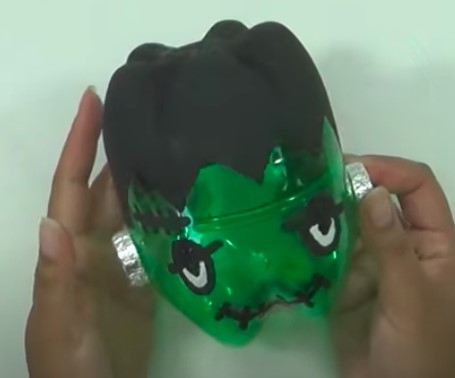
Frankenstein with recycled bottles

Take two large, empty soda bottles, cut out the bottom of each bottle and join the two parts.

On the top, paint the hair and eyes, then paint the mouth and some screws on the bottom.

Finally, take the bottle caps and wrap them in silver foil; They will look like two screws that you can stick in the bottle simulating the ears.

Source: Ecobrisa Manualidades con Reciclaje

Bats with bottles of liquid yogurt

Save the bottles of liquid yogurt you have at home and paint them black.

Also paint the occasional straws black to simulate the bat’s legs. Draw the wings on a piece of paper, paint them black, and glue them to the bottle.

Just add the eyes!

Today’s blog ends here. We hope you liked it a lot!

You can follow us on our social networks if you want to see more about us.

See you!


What to do with the large amount of electronic waste that we generate?

Technology is today an inseparable part of our lives.

In a world that is increasingly committed to the environment, recycling technological objects presents a challenge.

In today’s post we talk about the large amount of electronic waste we generate and what to do with it.

Technology, a fundamental part of our day to day.

If we listed the amount of electronic items we use throughout the day, we would surely lose count.

From the alarm clock that goes off every morning to the ebook that we use before going to sleep, going of course through the mobile phone, appliances, computers …

Our routine is marked by the use of electrical devices.

Also every so often we change mobile phones for example or we need a new tablet or we buy the new game console that has just come out.

The point is that we inevitably generate a large amount of highly polluting technological waste.

WEEE (Waste Electrical and Electronic Equipment)

These wastes are commonly known as WEEE (Waste Electrical and Electronic Equipment).

And if they are not treated correctly they pose a serious risk to the environment.

These wastes are generated in large quantities worldwide and in general standards, their recycling is mismanaged.

This type of garbage already reaches the levels of plastic waste, being even more dangerous than these due to its components.

We must bear in mind that WEEE is composed of toxic elements such as copper, lead, cadmium, mercury or nickel, among others.

An inappropriate treatment of this waste in a matter of recycling, can suppose a serious problem of contamination.

Since these compounds can reach seas and rivers or emit toxic substances into the atmosphere.

What can we do with the electronic waste we generate?

It is estimated that around 40 million tons of electronic waste are generated in the world and it is expected that in 2030 they will be more than one billion tons.

The vast majority of these wastes are not recycled correctly, so the environmental problem is quite serious.

But what can we do?

  • Ideally, first of all, the appliances should have a long service life.

There are many technological devices that we renew very often for a simple whim or a simple fashion, such as mobile phones.

We could commit to the environment and try to renew certain objects when absolutely necessary.

  • Second that we try to repair them.

Sure there are many objects that could continue to function subjecting them to a simple repair.

What happens is that, as a rule, electronic devices tend to be cheap and we feel that they are not worth fixing.

For a little more we can have a new product.

  • If we throw them away, we must make sure we take this waste to a clean point.

You can check the clean points in your area at https://www.ocu.org/consumo-familia/derechos-consumidor/calculadora/puntos-limpios

  • If we are going to replace an electronic device with a new one, we can deliver it to the store where we have made the purchase.

Usually they collect them and take over their management.

Recycling is increasingly ingrained in our daily routine.

We only have to incorporate this commitment to electronic waste and always deposit it where it corresponds.

If you have any questions, contact us.