dangerous residues What are they and how are they managed?

If we talk about recycling, we can talk about many types of waste that we can recycle.

But there are some in particular that need special treatment due to their nature. They are called hazardous waste.

In today’s post we tell you what they are and how to manage them.

What are hazardous waste?

We can classify as hazardous waste those materials or products that can release toxic substances into the environment.

They are residues whose own manipulation or carrying out an incorrect discharge can be very dangerous for any living organism, whether they are people, flora and fauna.

That is why it is so important to manage them correctly and following the protocols established in each case to prevent them from posing a risk to health or the environment.

Characteristics of hazardous waste

According to Ecoembes, depending on local regulations, the classification of hazardous waste will follow a specific protocol, but there are a series of standard guidelines that are common:

  • Corrosive residues: these are residues that can corrode the surfaces with which they come into contact. They are generally residues composed of acids. An example is sulfuric acid.
  • Hazardous waste due to chemical reactivity: this type of waste can also corrode surfaces and can even be explosive. Their main characteristic, however, is that they are not dangerous by themselves, but rather react when they come into contact with chemical elements. They usually come from the chemical industry. Some examples are mercury, lead or cadmium.
  • Explosive waste: this is waste that, if not treated properly, can cause explosions. The best known are dynamite or gunpowder.
  • Flammable waste: this waste is especially sensitive to heat and burns easily.
  • Toxic waste: these wastes, which can be organic or inorganic, are those that can be poisonous. They can come from different industries such as metal factories or construction, among others.
  • Radioactive waste: this category includes all those wastes that emit radiation. They can come from the chemical industry or power plants, among others.

Poor management of hazardous waste is the real risk of this waste, so it is essential to first identify it correctly and treat it accordingly.

How to manage hazardous waste?

The management of this waste has the following basic phases:

  1. Storage
  2. Labelled
  3. Transport
  4. Treatment, disposal or recovery operations

There are different factors that must be taken into account when managing hazardous waste. That the people who are going to carry out all the processes have adequate training for the work they are going to carry out is essential, since they must comply with mandatory safety standards.

The appropriate tools must be available to carry out the management, such as the uniforms or the necessary equipment to protect the workers.

We must bear in mind that each waste of a hazardous nature has a specific protocol when it comes to being managed. Workers must be fully aware of the guidelines for action that they must follow at all times.

The conclusion is that hazardous waste is to a greater extent when it is not managed correctly, rather than by its very nature.

Like the materials that we recycle daily at home, this type of waste must be properly treated so that it does not pose a threat to health and the environment.


Christmas crafts with mason jars

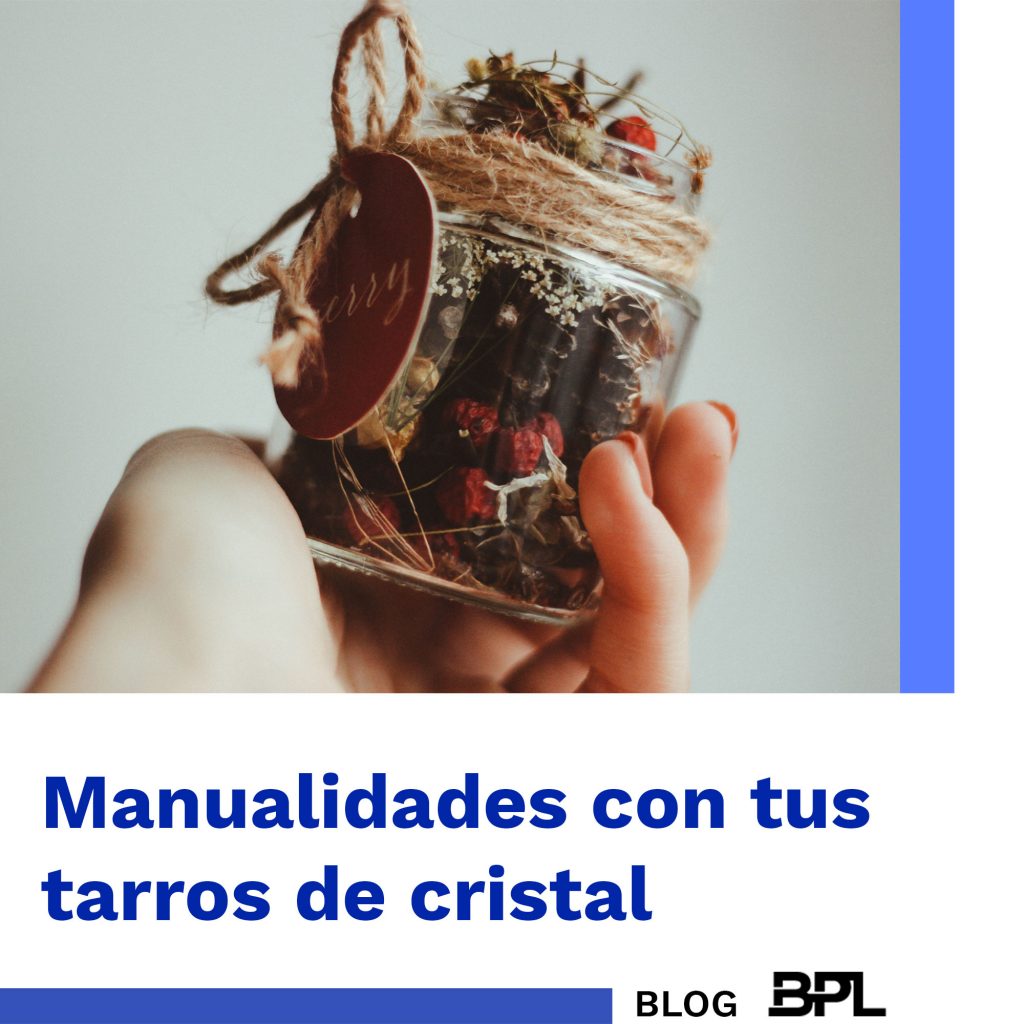
In a few days we have to get to the Christmas decorations. As recycling lovers that we are, we are going to propose some Christmas crafts with glass jars.

So go saving all those mason jars and take note;)

The best way to recycle mason jars

During the Christmas season we generate more waste. This is because we eat more meals and dinners with family and friends and therefore consume more food and drink.

From Baidal you know that we always encourage you to recycle everything possible and deposit the garbage in the corresponding containers.

If we buy foods that are packaged in glass jars, we can reserve a few to decorate them and make them part of our Christmas atmosphere.

In addition, after the holidays, we can deposit them in the glass container.

Jar with snow

Source: Pinterest

To make the decoration of this jar we need:

– One or more empty and clean glass jars.

-Common salt or epson salt that is a little larger and will give us a more “snowflake” appearance.

-Rope.

-Glue, which is usually used for crafts.

-Candles or Led lights.

-Pineapples, green leaves, berries …

Making these beautiful jars that will look great in our Christmas decorations is very easy:

-Once empty, wash and dry the glass jar well.

-We put the glue all over the outside of the jar with the help of a brush.

-Next, sprinkle the salt all over the jar, being careful not to touch the glue.

-We let it dry for about 20 minutes.

-We tie with the rope two pineapples, berries, leaves or any other element that we like and we think it looks good.

-We put the rope around the neck of the jar.

-To finish, we put a candle or Led lights, whatever we prefer, inside the jar.

Jars with candles as protagonists

Fuente: Hogarmanía

Jars and candles are the perfect combination for Christmas decorations.

We can simply put red or white candles inside the jar and that’s it or we can add something else.

Need:

-A clean glass jar.

-A candle.

-Salt.

-Decoration berries.

-A piece of ribbon, either made of fabric or red wool.

Elaboration:

-We put salt in the jar until a little less than half.

-We place the candle in the center.

-Around the candle we put the decoration berries.

-We make a bow on the neck of the jar with the ribbon.

A Christmas landscape in a jar

Source: Pinterest

If the jar is a good size, we can create our own Christmas passage inside.

It is very easy and we can use ornaments that we have at home, even our children’s dolls, they will love it.

Necessary elements:

-A clean glass jar.

-Cotton

-Some Christmas figure, such as a snowman, a tree or any figure that we like and that fits inside the jar.

-A few tree twigs.

-A piece of cloth.

-Rope or wool.

Elaboration:

-We put cotton in the jar until the entire bottom is covered.

-We place the figure or figures that we have chosen.

-We put the branches to look like a tree.

-We close the jar and place the piece of cloth covering the lid.

-We tie the fabric with rope, thread or wool, making a loop.

Recycling is fun, as you can see and all it brings us are advantages.

These are just a few examples, but imagination to power!

With a glass jar and a few elements you can create a Christmas decoration to your liking and totally personalized.

Share your designs with us😉


10 alternatives to plastic at home

By now, we all know the serious environmental problem we are facing. That is why in 2018 representatives of the Member States and the European Parliament reached an agreement to reduce plastic pollution.

These measures include, for example, a ban on the sale of single-use plastic items, such as plastic plates, cups or straws.

From home we can do our part and implement various alternatives to the use of plastic. We tell you about them in today’s post.

We can help with the change from home

Make no mistake, our lifestyle is largely based on consumption. Many of the objects we use on a daily basis imply the use of single-use plastic such as bags, plastic wrap to wrap our food or the use of plastic cutlery.

We must bear in mind the 3R method: reduce, that is, buy less, reuse all those objects that we can and recycle. If we have this internalized and also apply a series of changes at home, we will help in this battle in favor of the environment.

Alternatives to plastic at home

1.Bags

It’s something that a lot of people already do and it’s great. We must definitely forget about plastic bags when going to the supermarket and take our cloth bags from home.

It is estimated that more than one million plastic bags are used in the world every minute. These figures are devastating and we have to reverse them.

2. Cutlery

Who has not barbecued with friends and used plastic cutlery for convenience? It is normal, but luckily now there are alternatives to plastic cutlery and they are just as comfortable, as cutlery made of cardboard or bamboo.

A bit of the same happens with drinking straws, they are used very briefly so we can replace them with paper, bamboo or metal straws and forget about plastic.

3.Lunch boxes

Those of us who have small children at home usually use lunch boxes to save their lunch for school or to take a snack to the park.

A good alternative to the typical plastic tuppers or lunch boxes are the metal lunch boxes, they are very comfortable and practical for children.

For the tuppers that we use at home to store food, we can bet on the glass ones. They are quite resistant.

4.Film paper

When we prepare the sandwich for the little ones to take with them to school, the most practical thing is to wrap it in plastic wrap. If we want to stop using it, there are special wrappers to carry sandwiches, sandwiches or pieces of fruit that are made of cotton and can be adjusted to the size we need.

5.Toothbrushes

Renew the toothbrushes of the whole family and forget about those made of plastic. Get toothbrushes made with bamboo and whose bristles are made of biodegradable nylon.

They are also very cool!

6.Female hygiene

The compresses are made of plastic, an alternative would be to use the menstrual cup. They are made of silicone, they are reusable and we can use it for years.

This, in addition to reducing plastic pollution, represents an interesting economic saving for us.

There are also tampons made of organic cotton and totally biodegradable on the market.

7.Water bottles

Water is essential in our day to day and we usually take it everywhere, to school, to the office, to the gym … banish the plastic bottles of your life and bet on glass or stainless steel bottles.

They are comfortable and do not pollute.

8.Hangers

Now that we are in the middle of the wardrobe change for the autumn period, it is a good time to get rid of all the plastic hangers that we have at home.

Wooden hangers are a great alternative to plastic.

9. Buying in bulk

Many of the plastics that come into the house come from the supermarket. Fruits, vegetables or nuts, for example, often come packaged in plastic containers.

We can modify our purchase and acquire some of these products in bulk and take our own mesh bags from home to transport them.

10. Steel trash can

The garbage cans that we have at home are usually made of plastic. One option is to replace it with a stainless steel bucket.

There are some models that incorporate a carbon filter that can be changed and that controls bad odor.

By making these small changes and continuing with our recycling habits, we will do our bit to take care of the environment.

If you want to know more about plastic recycling, visit our website😉


Impact of plastic on nature

By now, we all know that plastic is very harmful to the environment and that recycling it whenever possible is essential.

In today’s post we detail the real impact it has on nature so that we can see the importance of a small gesture such as depositing our plastic waste in the yellow container.

The first stop: the oceans

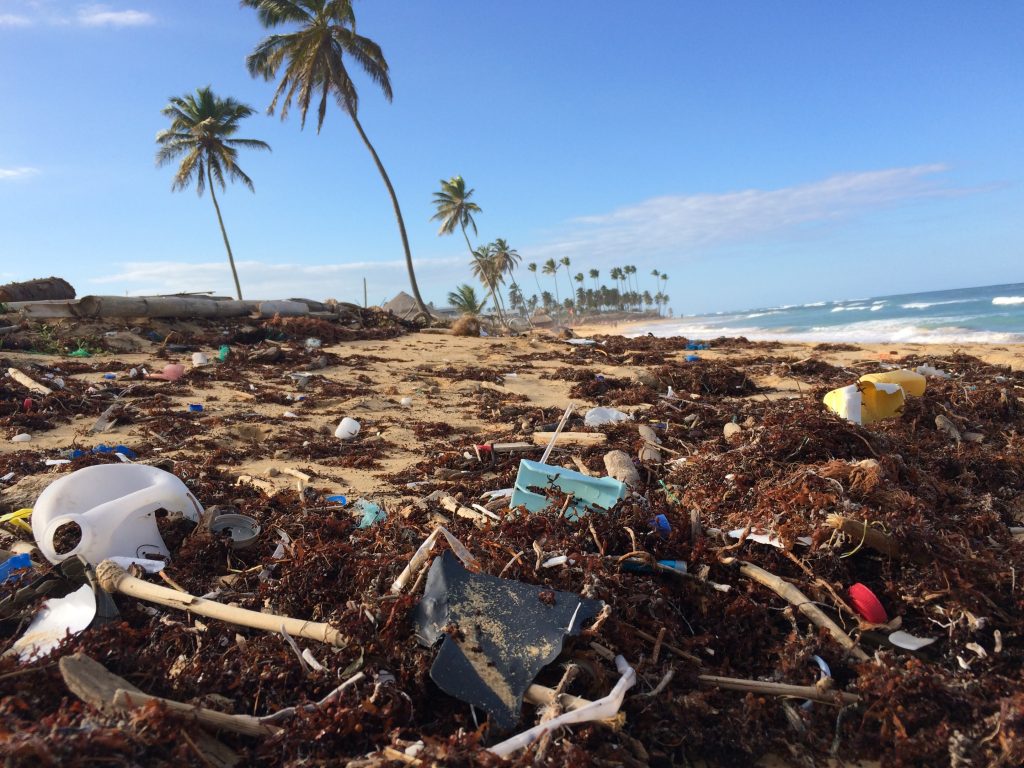
Most of the plastic waste that is not recycled correctly, unfortunately ends up in nature and of those, the vast majority, end up “swimming” through our seas and oceans.

According to Greenpeace, the garbage equivalent of 1,200 times the weight of the Eiffel Tower reaches seas and oceans every year. This fact has a devastating effect on the marine flora and fauna.

Many animals are trapped in the plastic waste and end up dying either suffocated or because the plastic does not allow them to eat.

In addition, some types of plastic release pollutants when they come into contact with water, which kills marine animals and destroys fauna.

Many fish end up eating plastics, so when we consume fish we are ingesting a considerable amount of microplastics that end up in our body.

Our forests

Plastic pollution in seas and oceans is the most visible, but unfortunately it is not the only one. Our forests and soils are also polluted by plastic waste.

A plastic bottle that we leave abandoned in the field will take about 500 years to decompose.

In addition, many of those plastics that are degrading, are absorbed by the soil and release toxic substances that can end up filtering until they reach some water source, such as lakes, rivers or seas.

These microplastics are already present on practically all surfaces, they are very small and it is easy for animals to ingest them, so they again enter our food chain with the risks that this poses to our health.

The air

Our skies and the air we breathe are also not spared from plastic pollution. The production of plastic itself expels a large amount of harmful substances into the environment.

Similarly, plastic when burned is one of the most polluting waste.

The only solution is to raise awareness and reduce the use of plastic elements, while recycling as much plastic waste as possible.

From Baidal we encourage you to do your part and reduce your plastic consumption, reuse and above all recycle all the plastic you use.


The importance of recycling batteries correctly

We all know that batteries contain highly polluting elements and that they are very difficult to break down.

Therefore, it is essential that they are recycled and disposed of correctly.

In today’s post we talk about the importance of recycling the pillars correctly and how to do it.

Batteries and their high polluting power

It is estimated that batteries take more than 1,000 years to biodegrade.

Hence the enormous importance of the gesture of recycling them correctly.

A battery contains highly polluting elements such as mercury, chromium, lead, zinc, arsenic or cadmium, which is why it is very harmful to the environment.

A single pile of mercury can contaminate up to 6,000 liters of water.

If we recycle it, we will help improve the quality of the planet’s water, reducing pollution and minimizing the emission of chemical elements.

If we do not recycle our batteries properly, they can decompose, damaging terrestrial ecosystems and be polluted for at least 500 years.

Ways to recycle batteries

There are different ways of recycling depending on the type of battery in question.

What you never have to do is throw them in the conventional trash, or throw them in the field, on the street or on the beach.

After depositing them where they correspond, they are transferred with special machinery to the corresponding treatment plants.

The first step is to classify the materials, as we indicated, each type of pile has a specific recycling process.

We can differentiate between:

  • Alkaline batteries
  • Button batteries
  • Rechargeable batteries
  • Lead batteries

Once the piles have been separated according to their category, most of them are shredded in order to separate their materials more easily.

During this recycling process, an attempt is made to recover different elements that make up the battery, such as magnesium, zinc and other metals.

In some cases, battery incineration is also used to recover cadmium, iron and nickel.

With these processes it is possible to take advantage of up to 75% of the components of a battery.

Components that are later used as raw material in other production processes.

The important thing is that from home we are aware of the high polluting power that something as small as a battery has.

We must do our part and deposit the used batteries in the containers installed for this purpose or take them directly to a clean point in our town.

From home we can collaborate to take care of the environment.


6 false myths about plastic

Hundreds of news related to plastic are written every day, so we receive a lot of information that is not always completely true.

Especially regarding its recycling there is still a lot of confusion.

In today’s article we talk about 6 completely false myths about plastic.

1. Recycled plastic is not valid for food products

Not all recycled plastics can be used for food packaging.

But there are some from plants authorized by the European Union and that comply with all food safety measures.

Therefore, they are completely safe to use for this purpose.

2. Plastic bags cannot be recycled

This is one of the most widespread myths and it is totally false.

In fact, the bags are very easy to recycle and we must always deposit them in the yellow container.

3. In Spain it is not recycled

Nothing is further from reality.

In Spain we are very aware of recycling, in fact in 2018, our country was the second European country that recycled the most plastic.

4. Only rigid plastic containers can be thrown into the yellow container.

In the yellow container we can deposit many objects that we use at the end of the day, from bottles, through bags, cartons of milk and juice, cans, metal containers, films or caps.

5. Plastic can be toxic

Plastic is not toxic by ingestion, in fact it is used to package food products as we indicated before.

Cosmetic products, toys, medicines … that is, they are biocompatible.

Its composition is subject to the sanitary controls stipulated by law to guarantee that it can be used without any problem.

6. Recycling is not going to change things

This is perhaps the most false of myths.

The small gestures that we carry out every day and that cost us nothing.

Separating our waste and throwing it into the corresponding container is a great step for all of us to help take care of the environment.

If we also incorporate simple actions such as reusing products, using a sustainable means of transport or consuming in a more responsible way into our daily routine, we will directly contribute to taking care of our planet.

Join the change and do your bit to take care of and protect the environment.


The plastic recycling process step by step

By now, we all know how important plastic recycling is. With such a simple action, how to separate our plastic waste and throw it into the corresponding container, we help these waste to have a second useful life, in addition to doing our bit to take care of the environment.

But what we do not know is that the plastic recycling process must go through several steps to achieve the desired result.

In today’s article on our blog we tell you about the plastic recycling process step by step.

Reception and selection of plastic

Once the plastic has been deposited in the corresponding container, it is transferred to the recycling plants where, at first, it is received and prepared for separation and selection according to its characteristics.

In the first place, those plastics that contain other materials such as metals or remains of dirt or dirt are separated.

They are also usually separated by color, thus saving on the consumption of colorants and it is easier to recycle them.

crushed

The plastic is crushed into very small pieces that are called pellets and that are usually shaped like small balls. In this way, the material is homogeneous and the rest of the process is easier.

washed

Next, the plastic goes to the sinks where it is washed with water and removed so that all the impurities that may have stuck to the plastic are deposited at the bottom.

Drying and spinning

In addition to drying the material, the centrifugation serves to finish getting rid of any foreign material or impurity that may still remain.

Extruded and filtered

The next step is necessary to achieve the final texture with which to work the plastic. It is first melted by heat to create a mass, at this point the color is added.

Once the desired texture is achieved, the material is subjected to a filtering process to finish removing any remainder or impurity that may remain.

Granced

In this step, small balls called pellets are obtained. Subsequently, it is analyzed that they comply with all the established quality requirements, they are packaged and stored.

The recycled plastic would already be ready to be bought and used for the manufacture of other objects.

From home, we must continue to do our part in the plastic recycling process. Remember, it costs nothing, you just have to separate the plastic waste and throw it in the yellow container.

If you have any questions about it, contact us.


Do you know what invisible waste is?

We live in a world, fortunately, increasingly aware of the problem of climate change and more committed to the actions that must be taken to stop it.

But even if we do our part at home and recycle plastic, cardboard, glass … there is a series of waste that we generate without even realizing it and that is a great detriment to our planet.

They are the so-called invisible waste and in today’s post we tell you what they consist of.

What is invisible waste?

Invisible waste is all the garbage that is generated to make an object.

A mobile phone, for example, generates about 86 kilos of waste during its production process, not counting the pollution derived from its continuous use.

Some jeans generate about 25 kilos of waste, it is pollution that we cannot control a priori, but we can do something so that the impact is not so strong.

Extending the useful life of an object will make those invisible residues of which we speak are less.

We can live perfectly without buying a mobile phone every year or without renewing all the clothes in our wardrobe.

How to combat invisible waste?

At a particular level we can reduce consumption, as we mentioned.

On many occasions we buy new objects and discard the old ones when we could still continue using them without problem, only because of fashions or impulses.

If extending the useful life of the object is not possible, we can always recycle it. Either reconverting its use, (with jeans we can create cushions or aprons for example), or depositing them in the corresponding containers for proper recycling.

We know that this is complicated in a society that constantly encourages us to consume, but we must try.

We add more R to our life

In addition to the already known reduce, reuse and recycle, there are 3 Rs that we can put into practice in our day to day.

Fix

We have become accustomed to throwing away objects when they are damaged, but we can take them to a specialized store and repair them to continue using them.

Recover

Surely if we look around our house, we will find a lot of things that we do not use. If we are no longer going to use them, we can give them away or exchange them with someone who is going to use them.

Renovate

That piece of furniture that is in perfect condition but has become a bit outdated can become a new piece of furniture if you give it a coat of paint in a more current color or if you change the handles, for example.

The important thing is to reduce our ecological footprint to the maximum.

Tips for recycling cooking oil

Oil is an element that we use daily in our kitchen and sometimes we use a large amount for frying, for example.
That oil, most of the time, ends up being thrown down the sink, which has a very negative impact on the environment.
In today’s blog we tell you how to properly recycle cooking oil.

The consequences of not recycling oil

Disposing of used oil down the sink drain has very negative consequences for the environment.

Although we associate that oil is a natural element, since we use it in our diet, if it ends up in water it is very polluting.

It is estimated that a liter of used oil that we dispose of incorrectly and ends up in the sea, can contaminate about a thousand liters of water.

In addition, it is very harmful to the pipes, and can clog them.

It can also lead to an increase in pests such as cockroaches and other insects.

What to do with used oil?

The most common thing is to store the oil that we are using to cook in used plastic bottles, whether they are 1.5 liters or 5-liter jugs.

Once the container is full, we must take it to a clean point that has specific containers to dispose of the used oil.

In some cities we can find this type of container in the urban nucleus.

With this oil, once it is recycled, biodiesel can be obtained.

But in addition to recycling it, we can reuse it in different ways.

We can reuse it to spread the molds when making a cake.

If we filter the oil to remove any remaining food or impurities, we can use it to make candles or even soaps.

We can also reuse it to polish wooden furniture or use it as a degreasing oil.

The important thing is not to throw it where we should not and do our bit to protect the environment.

If you are interested in everything related to recycling, visit our blog


Vegetable leather from pineapple

Vegetable leather is a must. Currently, the demand for animal skins is high and between 2008 and 2017 the European Union imported more than 10 million skins or leather products such as bags and belts, according to figures compiled by Pro Wildlife.

One of the most consumed products by the automotive industry is leather.

Thus, it is essential to look for alternatives to animal skins with vegetable leather.

There are cheaper and equally aesthetic options such as pineapple vegetable skin or pineapple vegetable leather.

Vegetable leather made from pineapple

This product that has similar properties and characteristics to animal skins.

It also contributes to the conservation of the environment while taking care of the cost.

In the future, it could be considered to create a network between fruit traders and vegetable skins producers, thus also contributing to being a socially responsible project.

Many plants and fruits are recognized for their resistance, either to weather conditions or for the composition of their fibers.

For some years now, brands such as Ananas Anam, have refused the idea of ​​making garments with animal skins and have opted for other circular economy alternatives.

The use of a textile is sought that can be made from the union of the fibers without having to be sewn, with a finish identical to that of animal leather.

Phases of the process

Make a prototype of vegetable skin based on pineapple stem leaves for various

applications takes a process, which is detailed below:

Obtaining raw material

First of all, the raw material must be obtained.

To obtain pineapple leaves, it is necessary to have a supplier of this waste raw material, for this, negotiations are carried out with markets that allow obtaining these waste.

Leafless

Secondly, we proceed with the leaf removal and degumming.

As part of the process, the leaf stalk must be removed from the pineapple leaves, which is removed from the top of it.

For this process it is necessary to carve the pineapple leaf with a metal spoon, along with this with a sandpaper of 3000 water, the cellulose protections of the leaf must be broken until reaching the fibers (thin filaments similar to a thread light brown).

After doing this, the vegetable fiber threads are thoroughly washed until the chlorophyll is completely removed from these leaves.

Dehydration

Then dehydration is carried out, which consists of using vacuum bags with which the dehumidification will be carried out in an oven, a process which will be carried out at 160 degrees Celsius, checking it every 15 minutes so that it does not harden and split.

Tissue

Next, the fibers are woven. In this stage, the pineapple fibers are interlaced one by one to obtain excellent quality.

After obtaining the cellulose from the pineapple, an industrial comber will be used to separate fiber by fiber.

In this process, a little oil will be placed as a humectant, in order not to tangle and thus obtain the pineapple thread with which the fabric will be created.

Laboratory tests

Finally, in order to check the resistance, durability, coloration and ergonomics, tests are carried out in laboratories, in which chemicals and colorants such as glycerin, coconut oil and starch are added to achieve the desired properties.