Differences between post-industrial and post-consumer plastics: what to recycle and how
When we talk about recycled plastic, two terms frequently appear that are important to understand: post-industrial and post-consumer.
Although both are essential to reducing environmental impact, they do not mean the same thing.
Understanding their differences helps in deciding which materials to use and how to manage them correctly in industrial projects or at home.
In today’s blog post we explain what each one is.
What is post-industrial plastic?
Post-industrial plastic comes from the waste generated during production processes.
This includes offcuts, rejected parts, extrusion or injection surpluses that did not reach the market or the end consumer.

Since it has not been used by people, this material is usually more homogeneous and cleaner.
This facilitates their reintegration into the manufacture of new parts.
This facilitates their reintegration into the manufacture of new parts.
What is post-consumer plastic?
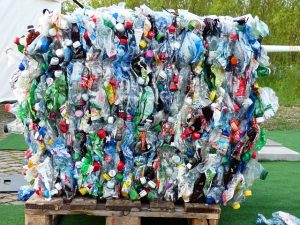
Post-consumer plastic comes from packaging, products, and waste that have already been used by consumers.
After passing through selective collection systems, these materials are sorted and prepared for recycling.
The main advantage of post-consumer plastic is that it truly closes the circular economy loop.
Transforming used materials into new products.
However, because it comes from different origins and uses, it may be more contaminated or mixed with other types of plastic.
Therefore, it requires more complex cleaning and sorting processes.
Advantages and limitations of each type of recycled plastic
Post-industrial plastic offers uniformity and traceability, since its origin and exact composition are known.
This makes it ideal for industrial applications where consistency and controlled quality are required.
Post-consumer plastic, on the other hand, provides environmental credentials and is preferred by companies that want to demonstrate a commitment to sustainability and comply with recycling regulations.
Their main challenge is the need for more careful processes to achieve quality standards similar to new or post-industrial plastic.
In terms of application, post-industrial is usually used in technical or industrial parts, while post-consumer is used both in packaging and in products where sustainability is an added value.
The choice between one or the other depends on the type of project, the traceability requirement, and the applicable regulations.
What to recycle and how to do it
For consumers, properly separating plastics is key.
Washing containers, removing food scraps, and sorting materials by type facilitates recycling and improves the quality of post-consumer material.

It is advisable to avoid multi-layered, glittery or metallized plastics, which hinder the recycling process.
In the industrial sector, post-industrial waste must be handed over to specialized managers.
These professionals ensure that the surplus materials are processed efficiently and safely, transforming them into new recycled material suitable for manufacturing.
In addition, before recycling, it is always helpful to consider reuse.
Bags, boxes, tapes, and other materials can have multiple lives if used consciously, thus reducing the amount of plastic that needs to be recycled.
Quality, traceability and certifications
For projects that demand strict quality standards, such as the food or automotive sector, it is essential to have suppliers that offer traceability and recognized certifications.
These certifications ensure that the recycled plastic meets the necessary technical and regulatory requirements and provide security for both manufacturers and consumers.
Not all recycled plastics are the same.
Post-industrial material is more uniform and easier to process.
While post-consumer waste closes the real circular economy cycle, it does require greater care in its separation and cleaning.
The choice between one or the other will depend on the end use, quality requirements, and legal obligations.
In both industry and at home, small decisions in plastic management can have a big impact on sustainability and the future of the planet.
At Baidal, we supply all types of recycled plastic materials to manufacturers of plastic products. Our plastic is free of impurities, of post-industrial origin, and comes with a quality guarantee.
Comments are closed.